
A volcano that has been dormant for hundreds of thousands of years could be preparing for a massive explosion, according to new research.
Scientists have measured signs of unrest at the Taftan volcano in eastern Iran, near the border with Afghanistan, even though there have been no eruptions in the last 700,000 years, according to a paper published earlier this month in Geophysical research letters.
Rapid uplift was detected near Taftan’s 13,000-foot-high summit between July 2023 and May 2024, while an analysis method to reduce random noise due to atmospheric conditions indicated that neither rain nor earthquakes triggered the unrest.

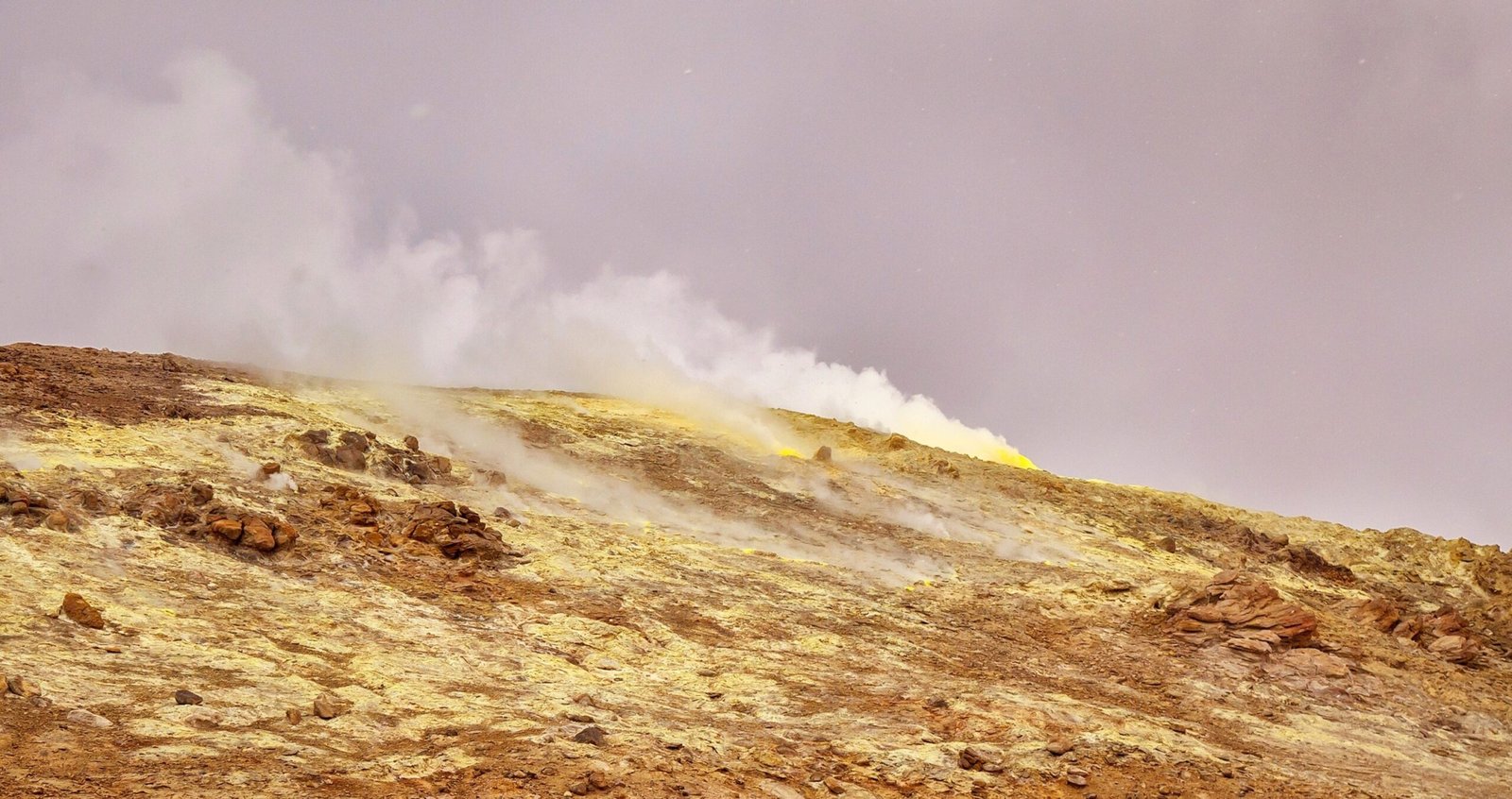
In this Jan. 3, 2020, file photo, sulfur gas is shown rising from the Taftan volcano in Iran.
FILE PHOTO/Getty Images
Therefore, an explosive eruption is likely imminent, the researchers said.
Changes in gas permeability within the shallow part of the volcano, as well as undetected deep movement of magma, have likely caused the buildup of hydrothermal pressure.
Taftan experiences frequent fumarolic (or gas venting) activity, but geological evidence indicates that it has not experienced a major eruption since 700,000 years ago.
“Uncertain” eruptions may have occurred in January 1902 and April 1993, according to the Smithsonian Institution report. Global Volcanism Program.

In this Dec. 23, 2019 file photo, the top of the Taftan volcano in Iran is shown.
STOCK IMAGE / Getty Images
Currently, Taftan is not monitored to the same level of scrutiny as other volcanoes due to its remote location. According to the article, space-based satellite sensing is the only data source to detect transitions from quiescence to unrest at many remote and unmonitored volcanoes.
The study reveals an urgent need to review the current volcanic risk of the Makran subduction volcanic arc, a roughly 275-mile stretch along the Indian Ocean, and establish volcano monitoring networks in the region.

In this Jan. 3, 2020, file photo, the Taftan volcano in Iran is shown.
STOCK IMAGE / Getty Images
“Our findings reveal that Taftan is more active than previously thought,” the authors wrote.


